Overiew
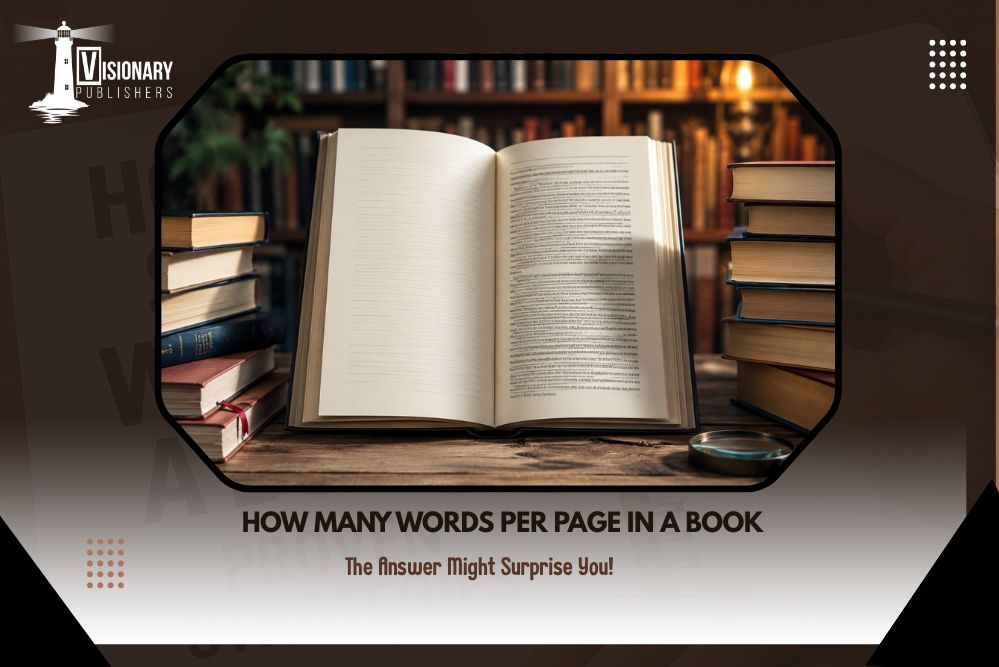
If you have ever picked up two books that look roughly the same size and noticed that one has way more text on each page than the other, you already understand the problem. How many words per page in a book is not a fixed number. It shifts depending on the genre, the trim size, the font, the margins, and a handful of other formatting decisions that publishers make before a book ever goes to print. This matters a lot whether you are a writer trying to estimate your finished book’s length, a reader curious about how publishers make these decisions, or someone exploring the best book writing services online before preparing a manuscript for the first time. Getting this wrong can mean your 80,000-word novel formats to 200 pages when it should be 300, or your children’s book ends up looking nothing like what you imagined.
This guide gives you the real numbers, the honest context behind them, and everything you need to make smart decisions about your own book’s wosadrd count and page count.
How Many Words Per Page in a Book on Average?
Let’s start with the number most people are looking for. The average words per page in a standard printed book falls somewhere between 250 and 300 words. That is the range you will see most consistently across adult fiction and nonfiction titles published by major houses.
So, if someone asks how many words is a page in a typical novel, 250 to 300 is your reliable answer. It is the industry standard that most publishers, formatters, and book editors work from when estimating page counts and production costs. That said, this average assumes a few standard conditions. It assumes a typical trim size, a readable font size of around 11 or 12 points, standard margins of around one inch on all sides, and normal line spacing. Change any one of those variables and your words per page shifts accordingly.
A mass market paperback, for example, uses a smaller trim size and often fits more words on each page, sometimes pushing closer to 350 words per page. A large print edition of the same book might only fit 150 to 175 words per page because the font is significantly larger. Same book, completely different page counts, because the formatting variables are different. Understanding this from the start saves a lot of confusion when you start calculating how long your own book will be in print.
How Many Words Per Page in a Standard Book by Trim Size
Trim size is one of the biggest factors affecting how many words fit on a page, and it is something a lot of first-time authors do not think about until they are deep into the book formatting process. The trim size of a book is simply its physical dimensions when printed and cut. Different genres tend to use different trim sizes, and those sizes directly affect how much text fits on each page.
How Many Words Per Page in a 6×9 Book
The 6×9 inch trim size is the most popular format for trade paperbacks, which book covers of most adult fiction and nonfiction books you find in a standard bookstore. At this size, with standard formatting, you can expect roughly 250 to 300 words per page. A Kindle edition of The Alchemist by Paulo Coelho or Educated by Tara Westover, if formatted for a 6×9 print edition, would fall right in this range. It is comfortable to read, widely accepted by retailers and distributors, and the format most readers are instinctively familiar with.
Mass Market Paperback
Mass market paperbacks are smaller, typically around 4.25 by 6.87 inches. You see them in airport bookshops and grocery store racks. Because the page is smaller, publishers use a slightly smaller font and tighter margins to fit more text. Words per page in a mass market paperback often runs between 300 and 350 words. Stephen King’s thrillers and many popular genre fiction titles use this format for their affordable paperback editions. The smaller page and higher word density allow publishers to keep production costs down while maintaining a comfortable reading experience.
How Many Words Per Page in a Paperback Book at Larger Sizes
Some nonfiction books, especially those with charts, sidebars, or heavy visual elements, use larger trim sizes like 7×10 or 8.5×11. At these sizes, the page is bigger, but publishers often use the extra space for white space, callout boxes, and visual breathing room rather than cramming in more text. Words per page at these sizes can actually be lower than the 6×9 standard, often falling between 200 and 250 words, depending on the layout.
How Many Words Per Page in a Typical Book by Genre
Genre matters as much as trim size when it comes to words per page. Different types of books follow different conventions, and readers in each genre have expectations that publishers are careful to meet.
How Many Words Per Page in a Nonfiction Book
Nonfiction books, especially in business, self-help, and personal development, tend to use more white space than fiction. You will often see shorter paragraphs, more subheadings, bullet points, and pull quotes breaking up the text. All of that visual breathing room reduces the word density on each page.
A typical nonfiction trade paperback in the style of Atomic Habits by James Clear or The 7 Habits of Highly Effective People by Stephen Covey runs around 200 to 250 words per page rather than the 300 you might see in a dense novel. The reading experience feels lighter and more navigable, which suits the instructional nature of most nonfiction content.
How Many Words Per Page in a Children’s Book
This is where the numbers shift dramatically. Children’s books are their own world entirely when it comes to words per page.
A picture book for the youngest readers, typically ages three to six, might have as few as one to ten words per page. Sometimes there are no words at all on certain spreads, letting the illustration carry the story completely. When you look at a book like The Very Hungry Caterpillar by Eric Carle or Goodnight Moon by Margaret Wise Brown, you are looking at pages with sometimes just a single sentence.
How many words per page in a children’s picture book for slightly older readers, say ages four to eight, tends to run between ten and fifty words per page. The text is still minimal because the illustrations share equal or greater storytelling responsibility.
Middle-grade books for readers aged eight to twelve move closer to adult nonfiction density, typically running 150 to 200 words per page with standard formatting and occasional illustrations.
Young adult novels sit closer to adult fiction at 200 to 275 words per page, sometimes higher, depending on the specific book and publisher.
How Many Words Per Page in a Book Manuscript
Here is where writers need to pay close attention, because manuscript formatting is completely different from published book formatting.
A standard manuscript page follows specific industry conventions. You use Times New Roman or Courier, 12-point font, double spacing, and one-inch margins on all sides. Under these conditions, a manuscript page holds approximately 250 words.
This is why the book publishing industry uses the 250 words per page standard when discussing manuscripts. An 80,000-word novel manuscript works out to roughly 320 manuscript pages. Agents and editors use this number constantly when discussing manuscript length, so understanding it saves a lot of confusion when you start submitting your work.
How Many Words Are on a Page: Font and Spacing Effects
Beyond trim size and genre, the specific formatting choices made during typesetting have a significant impact on how many words fit on each page.
Font choice matters more than most people realize. A book typeset in Garamond at 11 points fits more words per page than the same book set in Georgia at 12 points, simply because Garamond is a more compact typeface. Publishers choose fonts not just for aesthetics but for how efficiently they use space on the page.
Line spacing is another key variable. Standard published books use a line spacing of around 120 to 140 percent, which is tighter than the double spacing used in manuscripts but more open than single spacing. Tighter line spacing increases word density and reduces page count, while more generous spacing creates a more open, readable page with fewer words.
Margins affect word count per page significantly too. Wider margins reduce the text area and lower the word count per page. Narrower margins increase it. Publishers juggle all of these variables carefully to hit target page counts and production cost thresholds while maintaining a comfortable reading experience.
How Many Words in a Novel: Expectations by Genre
Understanding words per page also helps you understand how long your novel should be in total, since word count expectations vary significantly by genre.
A standard adult literary or commercial fiction novel runs between 80,000 and 100,000 words. At 275 words per page in a typical 6×9 trade paperback format, that works out to roughly 290 to 365 printed pages. This matches the length most readers expect when they pick up a standard novel.
Mystery and thriller novels tend to run slightly shorter, between 70,000 and 90,000 words, keeping the pace tight and the reading experience fast. Fantasy and science fiction novels often run longer, with many titles landing between 100,000 and 120,000 words, and some epic fantasy works pushing considerably beyond that.
Romance novels in the traditional category run between 50,000 and 100,000 words depending on the subgenre. Cozy mysteries sit at the shorter end, often 60,000 to 80,000 words.
How many words in a novel for young adult fiction typically falls between 60,000 and 90,000 words, while middle grade sits between 20,000 and 55,000 words. These shorter targets reflect the reading pace and attention expectations of younger audiences.
How Many Pages Is 3000 Words and 4000 Words?
These are practical questions that come up constantly for writers working on articles, chapters, and manuscripts. Here are the honest answers based on standard formatting conditions.
How Many Pages Is 3000 Words
In a published book with standard formatting at 275 words per page, 3000 words comes out to roughly 11 printed pages. In a manuscript formatted to industry standard at 250 words per page with double spacing, 3000 words fills approximately 12 manuscript pages.
In a Microsoft Word document with default settings, which usually runs around 500 words per page in single-spaced format, 3000 words fills about six pages. This is why the context of your formatting always matters when you are counting pages.
How Many Pages Is 4000 Words
At 275 words per page in a printed book, 4000 words works out to roughly 14 to 15 printed pages. In a double-spaced manuscript, that same 4000 words spreads across around 16 manuscript pages. In a single-spaced Word document, you are looking at approximately eight pages.
Neither 3000 nor 4000 words makes a chapter feel particularly long or short in a novel context. Most novel chapters run between 1500 and 5000 words, with many contemporary authors favoring shorter chapters in the 2000 to 3000 word range to maintain pace and encourage the “just one more chapter” reading experience.
How Many Words in a Paragraph and Why It Matters
This is a smaller detail but an important one for writers thinking about the reading experience on each page.
The average paragraph in a published book runs between 100 and 200 words, though this varies significantly by author and genre. Literary fiction often uses longer, denser paragraphs. Thrillers and commercial fiction tend toward shorter paragraphs to maintain momentum. Nonfiction uses even shorter paragraphs, often breaking ideas into focused chunks of 50 to 100 words to make the content easier to scan and absorb.
How many words in a paragraph is ultimately a craft decision as much as a formatting one. Longer paragraphs slow the pace and ask more of the reader’s concentration. Shorter paragraphs speed things up and create white space on the page that makes the reading experience feel lighter. The best authors vary their paragraph length intentionally, using longer paragraphs for reflective or descriptive passages and shorter ones for action, dialogue, and moments of high tension.
How to Estimate Your Book’s Page Count From Your Word Count
Here is a simple and practical method for estimating how long your book will be in print based on your word count.
Take your total word count and divide it by the average words per page for your book type. For a standard adult fiction or nonfiction trade paperback at 275 words per page, the calculation looks like this:
80,000 words divided by 275 equals approximately 291 pages.
For a mass market paperback at 325 words per page, that same 80,000-word manuscript would produce around 246 pages.
For a children’s picture book with an average of 20 words per page, a 500-word text would spread across 25 pages, which aligns with the standard 32-page picture book format when you account for front matter and blank pages.
These estimates are not exact because actual typesetting involves many small decisions that affect the final count. But they give you a reliable working estimate that is close enough for planning purposes.
If you are formatting a book for self-publishing and want a more precise page count before you finalize your interior design, most professional formatting tools like Vellum or Adobe InDesign will give you an accurate count once you input your text with your chosen fonts, sizes, and margins.
How Many Words Per Page in a Book: A Quick Reference Guide
Here is a simple reference you can bookmark and come back to whenever you need it.
Standard adult trade paperback (6×9): 250 to 300 words per page. Mass market paperback (4.25×6.87): 300 to 350 words per page. Large print edition: 150 to 175 words per page. Nonfiction with visuals and subheadings: 200 to 250 words per page. Young adult novel: 200 to 275 words per page. Middle grade novel: 150 to 200 words per page. Children’s picture book (ages 3 to 6): 1 to 50 words per page. Standard double-spaced manuscript: 250 words per page.
These numbers are averages and starting points rather than rigid rules. Your specific book’s formatting, font choice, and design will determine the final count, but these ranges give you a solid foundation to work from.
Let Visionary Publishers Handle Your Book
Understanding how many words per page in a book affects everything from your page count to your production costs to your reader’s experience. Getting the formatting right is one of those things that looks invisible when it is done well and immediately obvious when it is not. At Visionary Publishers, the team handles every aspect of book production, from writing and editing to professional interior formatting that puts the right number of words on each page for exactly the right reading experience. Whether you are writing a novel, a nonfiction guide, a children’s book, or anything in between, they bring the expertise to make your finished book look like it belongs on a professional bookshelf, because it does.
Close
Every book you have ever held in your hands was the result of hundreds of small formatting decisions, and how many words per page in a book is one of the most fundamental of those decisions. It shapes the reading experience, the physical weight of the book, the production cost, and even how seriously readers take the work before they read the first line.
For writers, understanding these numbers removes the guesswork from planning your manuscript and prepares you for the formatting process that comes after the writing is done. For readers, it gives you a new appreciation for the invisible drafts that goes into every book you open.
The standard is 250 to 300 words per page for most adult books. Everything else adjusts from there based on your genre, your audience, your trim size, and your formatting choices. Now that you know how many words per page in a book and why that number varies, you have one more tool in your kit for making your own book the best it can possibly be.
Frequently Asked Questions
How many words are typically on one page of a book?
Most standard adult books contain between 250 and 300 words per page. This assumes a typical 6×9 trim size, an 11- or 12-point font, standard margins, and normal line spacing. Mass market paperbacks can run slightly higher at 300 to 350 words per page due to their smaller format and tighter typesetting.
How many words make a 100-page book?
A 100-page book at the standard rate of 275 words per page contains approximately 27,500 words. This is roughly the length of a novella or a short nonfiction guide. At the lower end of 250 words per page, a 100-page book would contain around 25,000 words.
Does the number of words per page vary by book genre?
Yes, significantly. Adult fiction typically runs 250 to 300 words per page. Nonfiction with subheadings and visual elements often runs 200 to 250. Children’s picture books can have as few as one to fifty words per page. Young adult novels fall between 200 and 275 words per page. Each genre has conventions that reflect its audience and reading experience.
How many words fit on a manuscript page?
A standard manuscript page formatted to industry conventions, meaning double-spaced, 12-point Times New Roman or Courier, with one-inch margins, holds approximately 250 words. This is the standard that agents, editors, and publishers use when discussing manuscript length and page counts.
How can I estimate my book’s page count from its word count?
Divide your total word count by the average words per page for your book type. For a standard trade paperback at 275 words per page, an 80,000-word manuscript produces roughly 290 printed pages. For a mass market paperback at 325 words per page, the same manuscript would come out to around 246 pages. These are working estimates and actual typesetting may vary slightly.