Overview
Some of the most famous books ever written were not written by the person whose name appears on the cover. That is not a scandal. It is simply how ghostwriting works, and it has been a normal and accepted part of the publishing world for centuries. What is ghostwriting exactly, and why do so many successful authors, celebrities, business leaders, and public figures use it? This guide answers those questions honestly and completely. Whether you are thinking about hiring a ghostwriter, considering becoming one, or just curious about how the whole thing works, you will find everything you need right here. If you are already thinking about working with a professional, Ghostwriting Services and professional ghostwriting services are more accessible than most people realize. Let’s start with the basics.
What Is Ghostwriting? A Clear and Simple Definition
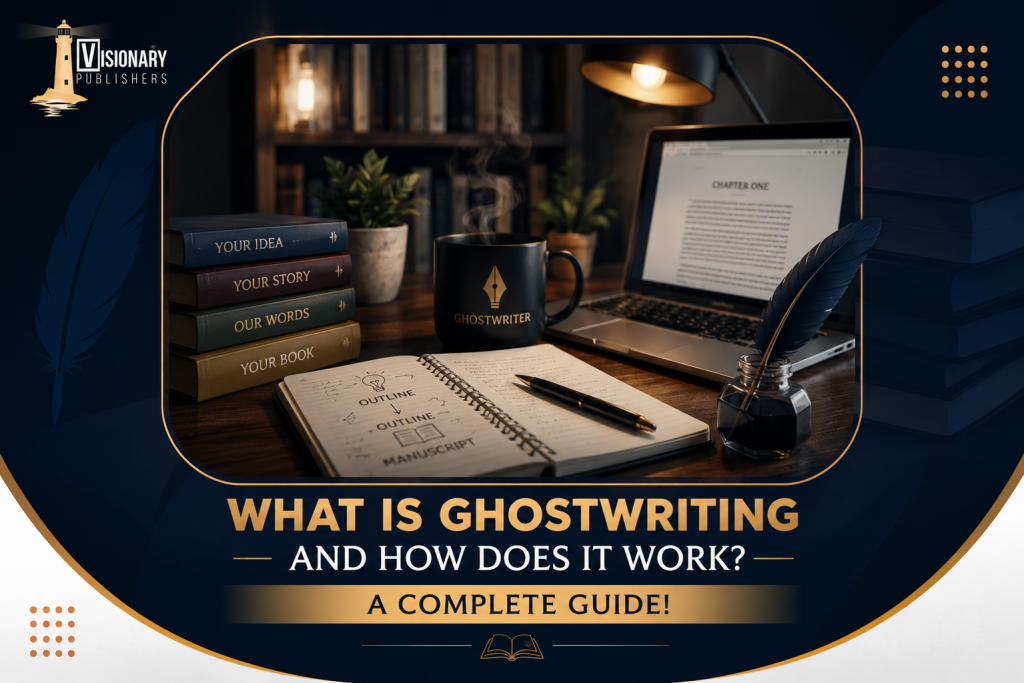
What is ghostwriting in its simplest form? Ghostwriting is the practice of writing content for someone else who then publishes it under their own name. The person who does the actual writing, the ghostwriter, receives payment for their work but no public credit for it. The person who hired them, the client, is listed as the author.
The ghostwriting definition covers a wide range of content. Books, memoirs, speeches, articles, blog posts, song lyrics, screenplays, and eBooks can all be ghostwritten. If a piece of writing is credited to someone who did not personally write it, ghostwriting is almost certainly involved.
The term ghost writer comes from the idea of an invisible presence behind the published work. Like a ghost, they are there but unseen. The work exists. The writer behind it does not appear.
What is ghostwriting mean in a legal and ethical sense? In most cases it is completely legal and widely accepted. Publishing contracts do not require authors to write their own books. As long as the content does not misrepresent authorship in a fraudulent context, such as academic work where personal authorship is explicitly required, ghostwriting is a legitimate professional service with a long and well-established history.
What Is Ghostwriting All About? The History Behind It
Ghostwriting is not a modern invention. It has existed in one form or another for as long as professional writing has existed. In the nineteenth and early twentieth centuries, many prolific fiction authors used ghostwriters to meet the demand for their work. Alexandre Dumas, author of The Three Musketeers and The Count of Monte Cristo, is widely believed to have employed a team of writing collaborators who drafted significant portions of his novels while he revised and published them under his name.
In the twentieth century, the practice became common in political speechwriting, celebrity memoir writing, and popular nonfiction. John F. Kennedy’s Pulitzer Prize-winning book Profiles in Courage is widely understood to have been written primarily by his speechwriter Ted Sorensen. Many presidential memoirs and political biographies involve significant ghostwriting collaboration even when the credited author is deeply involved in the content development.
In popular fiction, the Hardy Boys series, the Nancy Drew series, and countless other beloved series were written by multiple ghostwriters under the collective pen name of their publishers. Franklin W. Dixon and Carolyn Keene are not real people. They are house names used to brand series that many different writers contributed to over decades.
Today, ghostwriting is standard practice across nearly every category of publishing and content creation. Most celebrity memoirs, many bestselling business books, and a significant portion of the nonfiction titles you see on the bestseller lists involve professional ghostwriters working behind the scenes.
What Is Ghostwriting and How Does It Work? The Process Explained!
How does ghostwriting work in practice? The process varies depending on the type of project and the working style of both the client and the ghostwriter, but most professional ghostwriting engagements follow a broadly similar structure.

Stage 1: Initial Consultation and Scope Agreement
The process begins with a conversation between the client and the ghostwriter. This initial consultation covers the scope of the project, what kind of book or content is needed, the target audience, the general structure and length, the timeline, and the budget. Both parties need to understand clearly what the finished product should look like before any writing begins.
At this stage the ghostwriter is also assessing whether they can write convincingly in the client’s voice and whether this is a project they have the knowledge and skill to execute well. A ghostwriter who specializes in celebrity memoir ghostwriting will bring different strengths to a project than one who specializes in eBook ghostwriting or corporate nonfiction.
Stage 2: Research and Voice Development
Once the project is agreed upon and a contract is signed, the ghostwriter spends significant time in research and voice development before writing a single word of the manuscript.
For memoir and biography projects, this typically involves extensive interviews with the client. The ghostwriter asks detailed questions about the client’s life, experiences, opinions, and the specific stories they want to tell. These interviews may run for many hours across multiple sessions and are usually recorded for reference.
For nonfiction books on professional topics, the ghostwriter researches the subject matter thoroughly while also studying examples of the client’s existing writing, speaking, and public communication to understand their natural voice and communication style.
Voice development is arguably the most important and most underappreciated part of ghostwriting. A great ghostwriter does not impose their own voice on the client’s book. They disappear into the client’s voice so completely that the finished manuscript sounds authentically like the person whose name will appear on the cover.
Stage 3: Outline and Structure
Before drafting begins, most professional ghostwriters create a detailed chapter-by-chapter outline for the client to approve. This outline maps the full structure of the book, what each chapter covers, how the narrative or argument builds from beginning to end, and how the content is organized to serve the reader most effectively.
The outline review is a critical checkpoint. It is much easier to restructure a book at the outline stage than after tens of thousands of words have been drafted. A thorough outline also ensures that client and ghostwriter are fully aligned on direction before the time-intensive drafting work begins.
Stage 4: Drafting
With the outline approved, the ghostwriter begins writing the manuscript. Depending on the agreement, they may deliver the book in chapter-by-chapter installments for client review, or they may draft the complete manuscript before sharing it.
Chapter-by-chapter delivery allows for course corrections as the project progresses and keeps the client engaged with the work rather than presenting them with a complete draft that might need significant reworking. For longer projects, this staged approach is generally more efficient for both parties.
Stage 5: Revision and Refinement
Once the draft or full manuscript is delivered, the client reviews it and provides feedback. Professional ghostwriting agreements typically include a set number of revision rounds, often two or three, where the ghostwriter incorporates the client’s feedback and refines the manuscript accordingly.
The revision stage is where the client’s voice and perspective become more fully integrated. Clients often add specific anecdotes, clarify technical details, strengthen their particular opinions on certain points, or ask the ghostwriter to adjust the tone of certain sections to better match their authentic communication style.
Stage 6: Final Delivery
The final polished manuscript is delivered to the client, who then owns it completely. The ghostwriter has no ongoing claim to the work and typically signs a non-disclosure agreement that prevents them from revealing their involvement. The client publishes the book under their own name and receives all credit, royalties, and recognition as the author.
What Is a Ghostwriting Service? Types of Projects They Handle!
A ghostwriting service is a company or agency that connects clients with professional ghostwriters and manages the ghostwriting process from consultation through final delivery. What is a ghostwriting agency specifically? It is an organized business with a team of writers, book editors, and project managers who collaborate to produce ghostwritten content at scale and with consistent quality standards. What is a ghostwriting firm? Essentially the same thing, though firm typically implies a more boutique or specialized operation compared to a larger agency.
Here is an overview of the most common types of projects that ghostwriting services handle:
| Project Type | Description | Typical Length |
| Memoir and autobiography | Personal life stories for public figures, executives, and individuals | 60,000 to 100,000 words |
| Business and leadership books | Thought leadership content for CEOs and entrepreneurs | 40,000 to 80,000 words |
| Self-help and personal development | Practical guidance books for broad consumer audiences | 40,000 to 70,000 words |
| eBook ghostwriting | Shorter digital books used for marketing or direct sale | 5,000 to 30,000 words |
| Celebrity memoir ghostwriting | High-profile personal narratives with strong commercial expectations | 80,000 to 120,000 words |
| Children’s book ghostwriting | Picture books, early readers, and middle grade fiction | 500 to 30,000 words |
| Speeches and presentations | Written content delivered verbally by the credited speaker | Varies |
| Blog posts and articles | Ongoing content creation credited to the client’s byline | 500 to 3,000 words each |
| Academic-style books | Research-informed books for professional and academic markets | Varies |
What Is Ghostwriting for Businesses?
Ghostwriting for businesses is a growing and significant part of the overall ghostwriting market. Companies and their executives use ghostwriters for a wide range of purposes. Thought leadership books published under a CEO or founder’s name are one of the most common business ghostwriting projects. A well-written business book positions its named author as an authority in their field, generates media coverage and speaking opportunities, and provides a professional calling card that no other marketing material quite matches.
Blog posts, LinkedIn articles, and newsletter content are also frequently ghostwritten for busy executives and entrepreneurs who have valuable knowledge and perspectives to share but not the time or inclination to write regularly. White papers, case studies, and corporate histories are other common business ghostwriting projects that require professional writing skills and an understanding of how to communicate complex information clearly and persuasively for a professional audience.
What Is eBook Ghostwriting?
eBook ghostwriting specifically refers to the creation of digital book content credited to a client rather than the writer who produced it. It is one of the fastest-growing segments of the ghostwriting market because eBooks have become a powerful tool for personal branding, lead generation, and direct publishing income.
An entrepreneur who wants to publish a practical guide in their area of expertise might hire an eBook ghostwriter to transform their knowledge into a polished, readable digital product. A coach or consultant might commission a series of eBooks that serve both as standalone products and as marketing tools that demonstrate their expertise to potential clients.
The eBook ghostwriting process is typically faster and less intensive than full-length book ghostwriting because the word count is lower and the structure is usually more straightforward. A professional eBook ghostwriter can often deliver a complete 10,000 to 20,000 word eBook within a few weeks once the research and outline stage is complete.
How to Become a Ghostwriter: What It Takes
If you are drawn to ghostwriting as a career rather than as a client, understanding how to become a ghostwriter helps you see what the path looks like.
Skills You Need to Become a Ghostwriter
The most important skill a ghostwriter needs is not brilliant original prose. It is the ability to disappear into someone else’s voice. You need to listen carefully, study how your client thinks and communicates, and then write in a way that sounds authentically like them rather than like you. This requires empathy, flexibility, and genuine curiosity about other people’s perspectives.
Strong research skills are essential for almost every type of ghostwriting project. You will regularly be asked to write convincingly about subjects outside your own expertise, which means learning quickly and thoroughly from primary sources, expert interviews, and existing published material.
Discipline and professionalism matter as much as writing talent. Ghostwriters work to deadlines, manage complex client relationships, and often juggle multiple projects simultaneously. The business side of ghostwriting requires as much attention as the creative side.
How to Start Ghostwriting
To start ghostwriting, begin by identifying the type of content you are best positioned to write. Your existing knowledge, professional background, and writing experience all inform where you are most likely to produce excellent work quickly.
Build a portfolio by writing sample content that demonstrates your range and your ability to write in different voices and styles. If you have no ghostwriting credits to show, you can create anonymized samples that demonstrate your capabilities without revealing client information.
Platforms like Reedsy, Upwork, and Freelancer connect ghostwriters with clients. Reedsy in particular is respected in the book publishing industry and vets the ghostwriters it lists, which means being accepted onto the platform carries some professional credibility.
Networking within the publishing community, attending writing conferences, and building relationships with literary agents and book publishing companies who regularly work with ghostwriters is another effective path into the field.
How to Be a Ghostwriter: The Professional Reality
How to be a ghostwriter professionally means understanding that the work is often invisible by definition. You will write books that win awards credited to someone else. You will craft speeches that move audiences who never know your name. You will help people tell stories that genuinely matter while remaining entirely in the background.
For writers who are comfortable with this arrangement and find genuine satisfaction in helping other people’s stories reach the world, ghostwriting can be an extraordinarily fulfilling and financially rewarding career. For writers who need public recognition to feel motivated by their work, it is probably not the right fit.
How Much Does Ghostwriting Cost?
The cost of ghostwriting varies enormously based on the length and complexity of the project, the experience level of the ghostwriter, and the type of content involved.
Entry-level ghostwriters on freelance platforms typically charge between ten and thirty cents per word for basic content. At that rate, a 50,000-word book costs between five thousand and fifteen thousand dollars.
Mid-level professional ghostwriters with publishing experience and a portfolio of completed book projects typically charge between fifteen thousand and fifty thousand dollars for a full-length book depending on the scope and complexity of the project.
Senior ghostwriters who specialize in high-profile memoir, business books, or celebrity projects can charge seventy-five thousand dollars to two hundred fifty thousand dollars or more for a single book. These rates reflect years of experience, a proven track record, and the value of the professional relationships and editorial judgment they bring to a project.
For shorter projects like eBooks, blog posts, and articles, rates scale down proportionally. A professional ghostwriter might charge between five hundred and three thousand dollars for a short eBook and between one hundred and five hundred dollars for a single long-form blog post depending on the research intensity and the writer’s experience level.
Working With Visionary Publishers for Professional Ghostwriting Services
Finding the right ghostwriter is one of the most important decisions you will make in your publishing journey. The wrong match costs time, money, and the energy of a fresh start. The right match produces a book you are genuinely proud to put your name on. Visionary Publishers offers professional ghostwriting services for authors and clients across every genre and category. Their team of experienced ghostwriters brings deep publishing knowledge, strong voice development skills, and a genuine commitment to producing work that authentically represents the client while meeting the highest professional standards. Whether you need a full-length memoir, a business thought leadership book, a practical nonfiction guide, or a shorter eBook, Visionary Publishers matches you with a ghostwriter whose skills and experience align specifically with your project, your voice, and your goals.
Close
What is ghostwriting when you strip away any remaining stigma around it? It is a professional collaboration that allows people with important stories, valuable knowledge, and meaningful ideas to share those things with the world in a form that does justice to their content. It is practical, legal, widely accepted, and has produced some of the most beloved and influential books ever published. Whether you are an executive with a leadership story worth telling, a professional with expertise that deserves a wider audience, or a person whose life experience could genuinely help others, ghostwriting is the tool that turns your idea into a finished, published book. And whether you are a writer looking to build a sustainable career serving other people’s stories, ghostwriting offers a path that rewards skill, empathy, and professionalism in equal measure. What is ghostwriting in 2026? It is one of the most in-demand services in the publishing world and one of the most effective tools available to anyone who has a book worth writing but needs the right professional to help them write it.
Frequently Asked Questions
How does ghostwriting work?
Ghostwriting works through a structured collaboration between a client and a professional writer. The process typically includes an initial consultation, a research and voice development phase where the ghostwriter learns the client’s voice through interviews and study, an outline for client approval, a drafting phase, revision rounds based on client feedback, and final delivery. The client owns the completed work and publishes it under their own name. The ghostwriter is paid for their work and typically signs a non-disclosure agreement.
Why do authors hire ghostwriters?
Authors hire ghostwriters for several reasons. Many have valuable ideas, knowledge, or stories but lack the time to write a full book alongside their professional or personal commitments. Others have the ideas but find the sustained work of writing a book difficult or overwhelming. Some want to publish faster than they could writing alone. And some simply recognize that a professional writer will produce a better, more polished result than they could achieve on their own. Hiring a ghostwriter is a practical business decision, not an admission of inadequacy.
How much does a ghostwriter cost?
Ghostwriting costs vary widely. Entry-level ghostwriters on freelance platforms might charge five thousand to fifteen thousand dollars for a full book. Mid-level professionals typically charge fifteen thousand to fifty thousand dollars. Senior specialists working on high-profile projects charge seventy-five thousand dollars and above. Shorter projects like eBooks, articles, and blog posts scale down proportionally. The investment reflects the experience, skill, and professional judgment the ghostwriter brings to the project.
How long does it take to ghostwrite a book?
The timeline for ghostwriting a book depends on its length, complexity, and the availability of both the client and the ghostwriter for interviews and review sessions. A short eBook might be completed in two to four weeks. A full-length nonfiction book typically takes three to six months from initial consultation to final delivery. A complex memoir or heavily researched nonfiction project can take six to twelve months or longer. The revision and client feedback stages often determine the final timeline as much as the drafting itself.
What types of books can a ghostwriter write?
A professional ghostwriter can write virtually any type of book including memoirs and autobiographies, business and leadership books, self-help and personal development titles, fiction in most genres, children’s books, eBooks, academic-style books, cookbooks, and more. The best match between client and ghostwriter comes when the ghostwriter has specific experience in the relevant genre or category, so seeking a ghostwriter who specializes in your type of book rather than a generalist produces consistently better results.