
Overview
Many writers reach a moment when they feel ready to tell their life story, yet one question quickly appears: what is the real difference between memoir and autobiography? Both genres come from personal experiences, real emotions, and meaningful memories. Still, they are not the same. Each follows a different storytelling path and serves a different purpose for readers.
You might wonder if your story should cover your entire life or focus on one powerful chapter. Maybe you are asking yourself, Should I write a memoir or an autobiography? That confusion is completely normal, especially for first-time authors.
The good news is that choosing the right format becomes much easier once you understand how these book genres work. In this guide, you will discover how memoirs and autobiographies differ, where biographies fit in, and how to decide which style best matches your story, voice, and writing goals.

Difference Between Memoir and Autobiography: Understanding the Basics
The difference between memoir and autobiography comes down to focus, structure, and storytelling style. Both tell true stories. Both come from real experiences. However, they are not the same type of book.
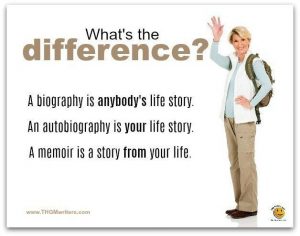
- An autobiography tells the complete story of a person’s life.
- A memoir focuses on specific moments, themes, or emotional journeys.
Think of it this way:
- An autobiography shows your entire timeline.
- A memoir explores meaningful chapters of your life.
Authors often confuse the two because both come from personal experience. The intention behind the story makes the real difference. Let’s have a detailed look at both.
What Is an Autobiography?
An autobiography is the story of a person’s life written in their own words. Instead of someone else telling your story, you become both the author and the subject. You guide readers through your experiences, decisions, challenges, and achievements from beginning to present day.
Most autobiographies start with early childhood and move forward step by step. Readers learn about family background, education, career growth, failures, successes, relationships, and defining life moments. The goal is to give a complete picture of how a person’s life unfolded over time.
Many writers ask, what is the difference between an autobiography and a biography? The answer is simple. An autobiography is written by the person themselves, while a biography is written by another author based on research and observation.
An autobiography usually includes:
- A full timeline of life events
- Accurate historical details
- Major turning points and achievements
- A clear chronological structure
Readers choose autobiographies because they want to understand the journey behind success or influence. For example, The Story of My Experiments with Truth by Mahatma Gandhi shares his life philosophy and personal growth. Similarly, Long Walk to Freedom by Nelson Mandela traces his life from childhood to leadership and political change.
Entrepreneurs, leaders, activists, celebrities, and innovators often write autobiographies because readers want insight into how their decisions shaped their lives. An autobiography allows readers to see not only what happened, but also how the author experienced those moments personally.
What Is a Memoir?
A memoir feels less like a history lesson and more like a personal conversation with the reader. It is deeply personal and emotionally focused. Instead of telling your entire life story, a memoir zooms in on specific experiences that shaped who you are.
Many writers ask, is a memoir written by the person? Yes, it absolutely is. A memoir comes directly from the author’s own memories, thoughts, and emotions. You are not trying to document every event in your life. You are sharing the moments that changed your perspective or taught you something meaningful.
Unlike an autobiography, a memoir does not follow a strict timeline. You might move between past and present, reflecting on memories that connect to a central theme.
Memoirs often explore:
- Personal transformation or self-discovery
- Important relationships or family dynamics
- Challenges, loss, or healing journeys
- A specific phase of a career or life transition
- Cultural identity or emotional growth
For example, Becoming by Michelle Obama focuses on her personal experiences and identity rather than listing every event chronologically. Another well-known memoir, Eat, Pray, Love by Elizabeth Gilbert, centers on one period of self-discovery instead of her entire life story.
A memoir chooses depth over detail. It highlights emotional truth rather than complete history. Readers connect strongly with memoirs because they feel honest, reflective, and relatable. They do not just learn what happened; they understand how those experiences felt and why they mattered.
Memoir vs Autobiography: Key Differences
Understanding the difference between a memoir and an autobiography becomes much clearer when you look at why each type of book is written. Both genres tell real stories based on personal experiences, but they approach storytelling in very different ways.
Think of it this way: an autobiography answers “What happened throughout my life?” while a memoir explores “What did these experiences mean to me?”
Here’s a simple comparison to help you see the distinction more clearly:
| Feature | Memoir | Autobiography |
| Meaning | Focuses on meaningful life experiences or themes | Covers the author’s entire life story |
| Scope | Select moments, memories, or emotional journeys | A complete timeline from early life to present |
| Structure | Flexible storytelling; may move between past and present | Usually chronological and structured |
| Tone | Personal, reflective, and emotional | Informational, factual, and historical |
| Goal | Share lessons, insight, or personal transformation | Document a full life journey and achievements |
| Reader Expectation | Emotional connection and relatability | Comprehensive understanding of a person’s life |
Both memoirs and autobiographies are rooted in truth. The real difference lies in how much of your life you choose to share and how you choose to tell it. If your goal is to explore a powerful experience, a turning point, or a personal lesson, a memoir may be the perfect fit. But if you want readers to follow your life story from beginning to present day, an autobiography provides the broader canvas.
Autobiography and Biography Difference
Writers also mix up memoirs with biographies, which creates additional confusion.
The difference between an autobiography and a biography depends on who writes the story.
- Autobiography: Written by the person themselves.
- Biography: Written by someone else about that person.
So, what is a biography?
A biography tells the story of someone’s life through research, interviews, and historical records. The subject does not usually write it.
When asking what is the difference between an autobiography and a biography, remember one simple rule:
Autobiography equals self-written. Biography equals written by another author.
Difference Between Autobiography and Memoir in Writing Style
The difference between autobiography and memoir also appears in writing style.
Autobiographies tend to be structured and factual. They document events clearly and objectively. Whereas the memoirs allow more creativity. Writers explore feelings, memories, and lessons learned. A memoir may move between timelines, memories, or reflections. Emotional truth matters more than chronological detail. We can say that:
Autobiographies answer the question: What happened in my life?
Memoirs answer the question: What did these experiences mean to me?
What’s the Difference Between Autobiography and Memoir for Authors?
Many first-time authors struggle with choosing the right format.
Ask yourself these questions:
- Do you want to tell your entire life story?
- Or do you want to explore one powerful chapter?
- Are you documenting history?
- Or sharing emotional insight?
If your goal is legacy and documentation, an autobiography fits better and if your goal is connection and storytelling, a memoir often works best. Understanding what’s the difference between autobiography and memoir helps you align your story with reader expectations.
Is a Memoir Written in First Person?
Yes, most memoirs are written in first person. The writer speaks directly to readers using “I” and “my.” This voice creates intimacy and authenticity. Readers expect memoirs to feel personal and honest. The storytelling feels like a conversation rather than a historical record. Autobiographies also use first person, but their tone usually feels more formal and structured.
Why Authors Choose Memoir Today
In recent years, memoirs have become extremely popular. Modern readers enjoy personal storytelling. They want emotional journeys, lessons learned, and relatable experiences. Memoirs allow writers to:
- Share healing stories
- Inspire readers
- Build personal brands
- Connect through vulnerability
Many bestselling books today fall into the memoir category because readers value authenticity.
What Is the Best-selling Memoir of All Time?
One widely recognized example is The Diary of a Young Girl by Anne Frank. Another modern example includes Michelle Obama’s Becoming. These books succeed because they combine personal experience with universal themes such as resilience, identity, and hope.
Successful memoirs make readers feel understood.
When Should You Write an Autobiography?
Autobiographies work best when:
- Your life spans major achievements or public influence.
- Readers want a complete timeline.
- Historical context matters.
- You want to document legacy.
Public figures, founders, leaders, and innovators often choose autobiographies because readers expect comprehensive stories.
When Should You Write a Memoir?
Memoirs work well when your story centers on transformation rather than chronology.
You might write a memoir if:
- One experience changed your life.
- You overcame a major challenge.
- You want to teach through storytelling.
- Emotional reflection matters more than timeline.
Many first-time authors start with a memoir because it feels more natural and focused.
Common Mistakes Authors Make
Writers often misunderstand genre expectations.
Some try to include their entire life inside a memoir. Others remove emotional depth from an autobiography.
Avoid these mistakes:
- Do not confuse facts with storytelling.
- Do not overload readers with unnecessary history.
- Choose clarity about your book’s purpose early.
Knowing the difference memoir vs autobiography helps avoid confusion during writing and publishing.
How Visionary Book Publishers Helps Life Story Authors
At Visionary Book Publishers, we help authors transform personal experiences into powerful books. Whether you are writing a memoir, autobiography, or biography, our team guides you through every step. We assist with writing support, editing, structure development, cover design, marketing strategy, and book publishing services.
Many authors have meaningful stories but struggle to shape them into compelling books. Our experts help refine your narrative while preserving your authentic voice. From idea to publication, we ensure your story reaches readers professionally and confidently.
How to Decide Between Memoir and Autobiography
If you still feel unsure, try this simple exercise.
Imagine explaining your book in one sentence.
If you say, “This book tells my life story,” you are writing an autobiography, and if you say, “This book explores how one experience changed me,” you are writing a memoir. Your intention reveals the right genre.
The Emotional Power of Personal Storytelling
Readers connect with honesty more than perfection.
Memoirs invite empathy. Autobiographies build understanding. Biographies preserve legacy.
Each format serves an important purpose in literature.
Your job as an author is not to choose the better genre. The job is to choose the one that fits your story naturally.
Your Story, Your Format, Your Voice
We hope this guide has helped you clearly understand the difference between memoir and autobiography and feel more confident about telling your story. Both memoirs and autobiographies allow authors to leave a lasting impact. The right choice depends on your purpose, audience, and message. When you understand your story’s focus, writing becomes easier and more meaningful. Whether you choose memoir or autobiography, remember that readers value honesty, clarity, and emotion. Your experiences matter. Your voice matters. With the right structure and guidance, your personal story can inspire, educate, and connect with readers around the world.
Frequently Asked Questions
Can a memoir be a biography?
No. A biography is written by someone else about a person’s life. A memoir is written by the individual sharing personal experiences.
Are all memoirs autobiographies?
Not exactly. Memoirs fall under life writing, but they focus on specific experiences rather than an entire life story.
Is a memoir written in first person?
Yes. Most memoirs use first person narration to create intimacy and authenticity with readers.
What is the best selling memoir of all time?
One of the most famous bestselling memoirs is The Diary of a Young Girl by Anne Frank, loved worldwide for its emotional honesty.
What are the rules of a memoir?
A memoir should be truthful, focused on a theme, emotionally reflective, and written from personal experience rather than full chronology.